The short list
The five things to check before buying
Contour and cervical pillows vary a lot even within the same general shape. Here's what tends to matter most.
1. Loft height
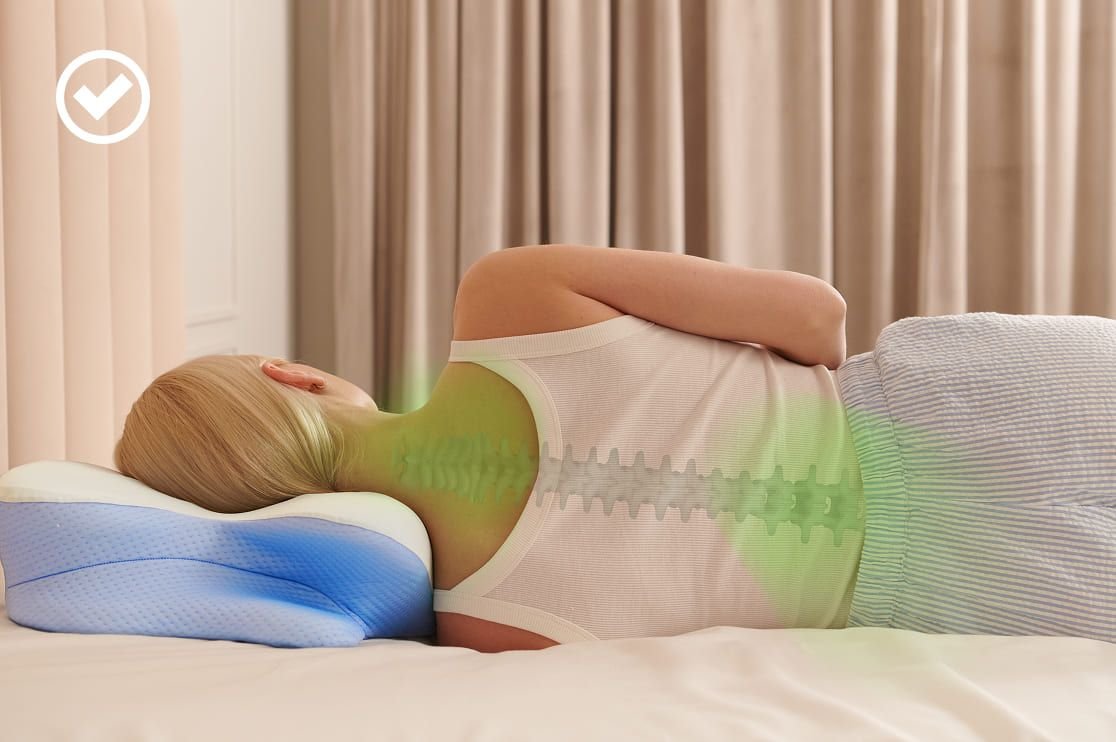
Loft is the height of the pillow when compressed under your head. Too low and your neck sags toward the mattress; too high and it's pushed upward out of alignment. Back sleepers generally need a lower loft than side sleepers, who need enough height to fill the larger gap between the ear and the mattress created by the shoulder.
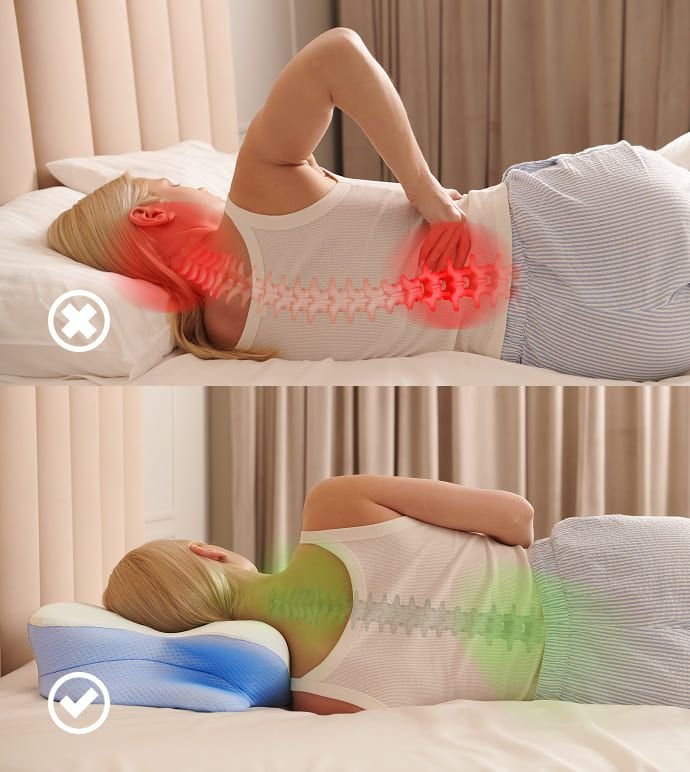
2. Firmness and material
High-density memory foam holds its shape under the weight of your head rather than flattening out over the night, which is part of why many contour pillows use it. Softer fills (down, standard poly-fill) feel plush but offer less consistent support and flatten faster. Firmness preference is personal — some people with neck sensitivity prefer a slightly softer top layer over a firmer support core.
3. Contour/shape design
A "butterfly" or wave-contour shape typically has a raised outer ridge and a lower center channel, intended to cradle the head while supporting the neck. Cutouts on either side (as seen on some designs, including the Derila Ergo) are marketed as allowing a hand or shoulder to tuck through comfortably during side-sleeping. Whether a specific contour shape suits you depends on your shoulder width and preferred sleep position — there's no universal "best" shape.
4. Cooling / breathable cover fabric
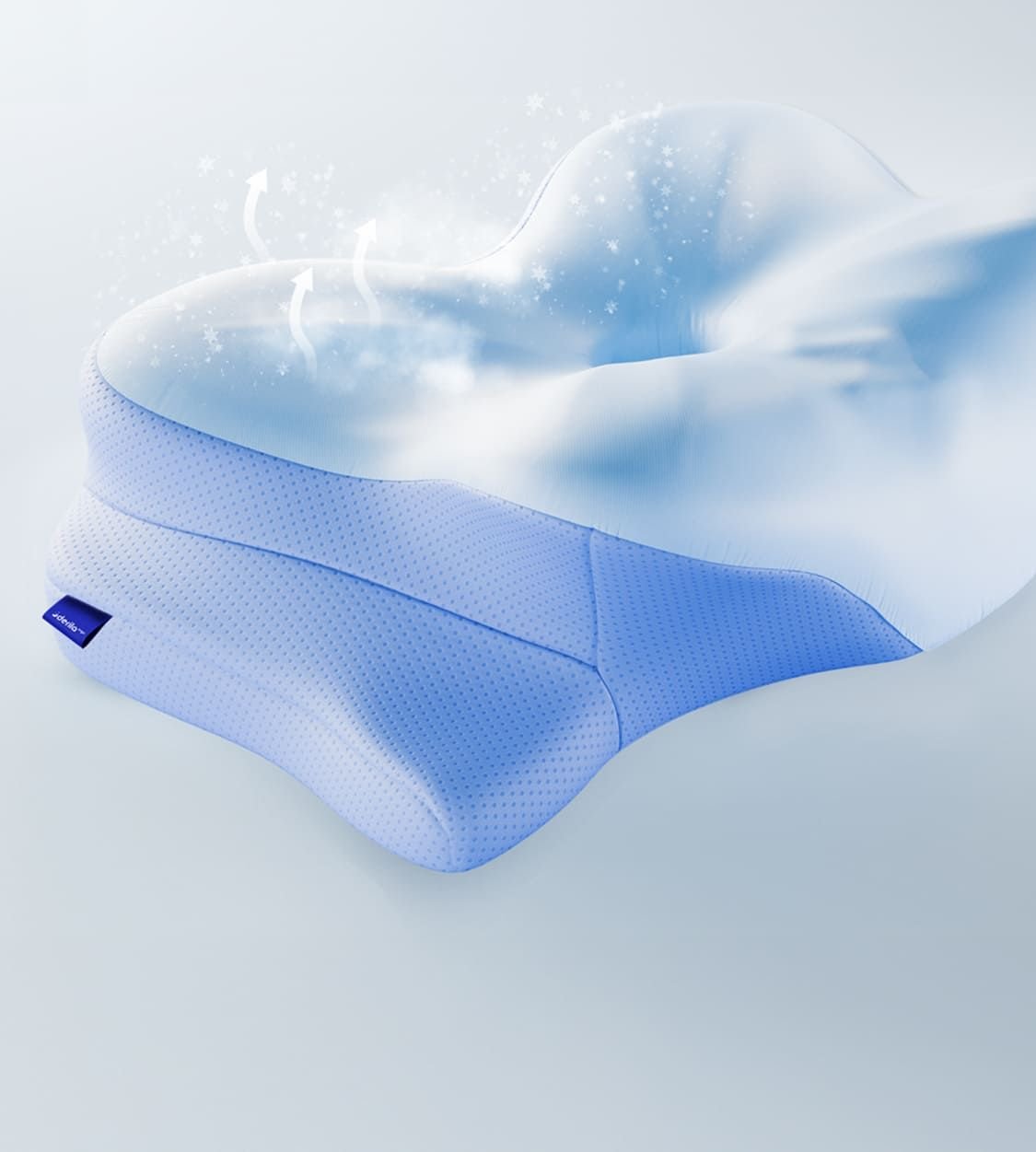
Memory foam sleeps warmer than looser fills because it's denser and traps more body heat. Breathable, moisture-wicking cover fabrics (often marketed as "cooling gel" or with a ventilated weave) are intended to offset this. If you sleep hot, prioritize a pillow with a genuinely breathable cover and check whether the cover is removable and washable.
5. Return policy and trial period
Because pillow comfort is so individual, a real-world trial matters more than spec sheets. Before buying anything — from any brand — confirm the seller's return window, whether opened/used pillows can be returned for hygiene reasons, and who pays return shipping. Our guide to buying a contour pillow online safely walks through verifying the seller before you reach checkout.
A note on marketing claims
Phrases like "clinically proven," "doctor recommended," or specific percentage improvement figures on pillow marketing pages should be treated skeptically unless the brand links to an actual, checkable study on the specific product — not just general category research. See our Research & Evidence page for what real studies do and don't show.
Materials glossary
| Term | What it typically means |
|---|---|
| High-density memory foam | Viscoelastic polyurethane foam that slowly conforms to pressure and heat, then returns to shape. Denser foam generally holds support longer. |
| Contour / ergonomic design | A non-flat shape (wave, butterfly, ridge) intended to match head/neck curvature rather than a plain rectangular block. |
| Cooling gel-infused foam | Memory foam with gel beads or swirls mixed in, marketed to draw heat away from the sleeper — effectiveness varies by product and is hard to verify without independent lab testing. |
| CertiPUR-US / OEKO-TEX | Independent certification programs relating to foam emissions or textile safety testing. A certification badge indicates the product was tested against that standard — always worth verifying directly with the certifying body if it matters to your decision. |
Frequently asked questions
What pillow loft (height) is best for neck pain?
Some studies point to roughly 10cm as a commonly recommended loft for supine sleepers, but the right height depends on your body size, mattress firmness, and sleep position. Side sleepers generally need more loft than back sleepers.
Is memory foam better than a standard fill pillow?
Memory foam tends to hold its shape and provide firmer, more consistent support than loose poly-fill, which can matter for cervical alignment. It is not automatically "better" for everyone, since it also sleeps warmer and has a different feel that some people dislike.
How do I know if a contour pillow will fit my sleep position?
Check the manufacturer's guidance for back, side, and stomach sleeping, and look at the pillow's contour depth. A deep contour cutout suits side sleepers who need shoulder clearance; a shallower profile often suits back or stomach sleepers better.